Couples Counselling in Penrith | NTD Psychology
Evidence-based support for couples who are considering help but aren’t yet convinced it will work.
- 25 years as a registered psychologist, not a counsellor
- Board-approved supervisor, assessed by the Psychology Board of Australia
- Evidence-based methods: Gottman Method and Attachment Based Therapy
- Level 3 Couples therapy training through the Gottman Institute
- AHPRA-registered, practising under a legally enforceable code of conduct
- No GP referral needed to make an enquiry
- No Medicare rebates for Couples therapy, only individual therapy
Not ready to book? An enquiry is enough to get started.
Take the first step
Take the first step
Most couples who come to NTD Psychology didn’t leave it too long; they just waited until they were sure. Research from the Gottman Institute puts the average at six years of significant relationship distress before a couple seeks help. Six years. If you’re reading this page, you’re already ahead of that.
The question isn’t whether things are bad enough. It’s whether you want a registered psychologist with 25 years of experience in your corner.
Nadine is an AHPRA-registered psychologist with 25 years of experience working with couples in Penrith and Western Sydney. To ask a question or arrange an initial session, contact NTD Psychology directly.

Why couples seek relationship counselling, and why most wait
According to Gottman Institute research [source link], couples sit with the problem for an average of six years before they do anything about it. That’s not a weakness. That’s what waiting to be sure looks like.
The three patterns that bring most couples to relationship counselling aren’t dramatic. They’re persistent conflict that cycles through the same arguments without resolution, emotional withdrawal where one or both partners have quietly disengaged, and communication breakdown where even routine conversations carry weight they shouldn’t.
None of those things signals a relationship that’s finished. They signal a relationship that needs a structure it doesn’t currently have.
Couples who are genuinely fine don’t search for marriage counselling on a Tuesday night. The uncertainty about whether things are bad enough is, itself, a reason to talk to someone.
Understanding why couples come is one thing. Knowing what actually happens once they do, that’s where most people’s real questions start.
Our Services
You do not need to be in crisis to see a psychologist. You need to be affected, and if anxiety is changing the way you work, sleep, or relate to the people around you, that qualifies.

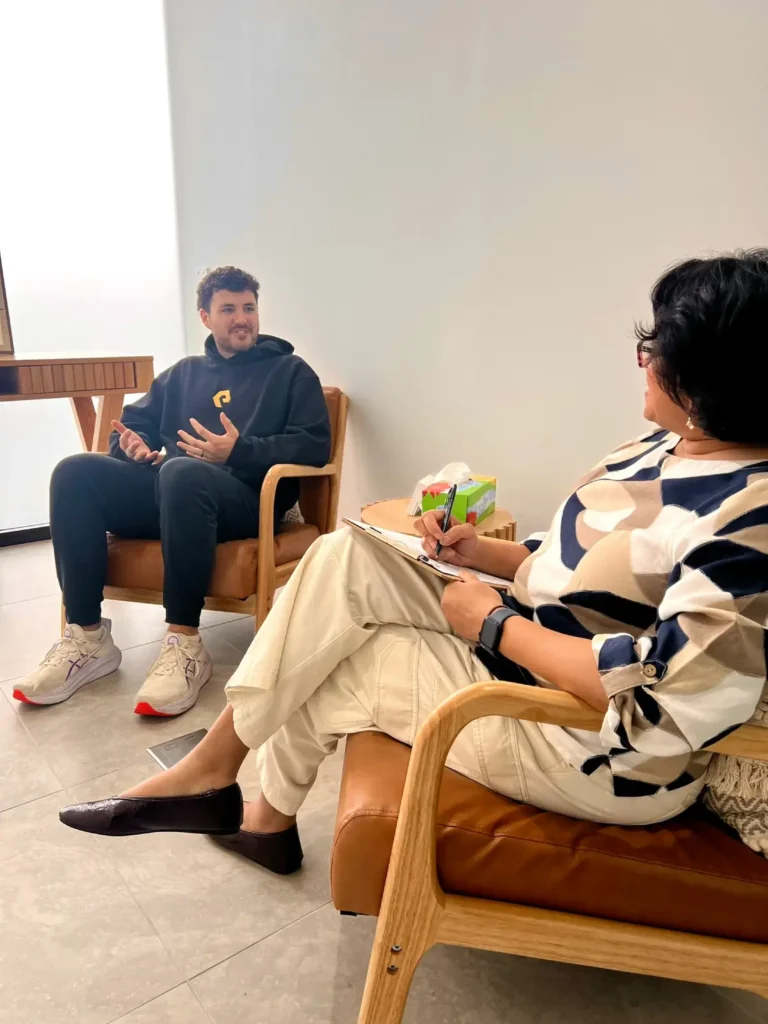
Couples therapy at NTD Psychology is structured work, not an open-ended conversation. Both partners attend together.
What couples counselling actually involves at NTD Psychology
Couples therapy at NTD Psychology is structured work, not an open-ended conversation. Both partners attend together. A typical course runs 8–12 sessions, each with a clear focus, not a standing check-in, but a progressive process with a registered psychologist guiding the clinical direction.
Nadine draws on two evidence-based frameworks, Emotionally Focused Therapy and the Gottman Method, adjusting the emphasis depending on what the couple presents with. Most couples encounter elements of both.
Emotionally Focused Therapy (EFT)
EFT identifies the emotional patterns underneath recurring conflict, the cycles that keep producing the same arguments regardless of the topic. In a session, this looks like slowing a familiar argument down far enough to identify what each partner is actually responding to, rather than what they're arguing about on the surface.
The Gottman Method
The Gottman Method treats relationship skills as learnable, including communication, conflict de-escalation, and the repair of trust after it's been damaged. Practically, this means structured exercises between sessions, not just in-room reflection. Couples leave with tools to use during the week, not just insights to sit with until the next appointment.
Working with a registered psychologist means the clinical approach is supervised and adapted as the work develops, not a fixed programme running on rails regardless of what’s happening in the room.
Does couples counselling work? What the research says
The question almost everyone asks before booking is a version of: Does this actually work?
Peer-reviewed research on Emotionally Focused Therapy shows approximately 70–75% of couples report significant improvement following a structured course of treatment. That figure comes from clinical research, not a practitioner’s website.
What the research doesn't promise
Some couples separate after counselling. That’s worth saying plainly, because the fear of it is one of the main reasons people don’t come.
Counselling doesn’t manufacture a connection that was never there. A structured process with a registered psychologist gives both partners enough clarity to make a real decision about the relationship and about themselves. For some couples, that means rebuilding.
For others, it means separating with considerably less damage than they’d have caused without help. Neither outcome is a failure of the process.
No registered psychologist can promise a specific result, and any who does should be a red flag, not a reassurance. The value is access to an evidence-based method, applied by someone with clinical training to adjust it in real time.
The research tells part of the story. Who’s in the room tells the rest.
Couples counselling vs. marriage counselling: Is there a difference?
Couples counselling, marriage counselling, relationship therapy, and marriage therapy in Australia, these terms describe the same service. The label changes depending on who’s searching and who’s providing. The clinical process doesn’t.
NTD Psychology works with couples regardless of relationship status, married, de facto, long-term, or otherwise. The presenting issues are the same. So is the framework used to address them.
The more relevant distinction has never been what the service is called. It’s who is delivering it.
Working with Nadine, what to expect from a registered psychologist
Nadine Dardaneliotis is an AHPRA-registered psychologist with over 25 years of clinical experience. That length of practice reflects more than time; it reflects the breadth of people she has worked with, the range of presentations she has seen, and the clinical judgment that only develops through sustained, real-world work with real people.
AHPRA registration means Nadine practises under a legally enforceable code of conduct, mandatory continuing professional development, a formal complaints mechanism, and a defined scope of practice. For couples, that means the person in the room is accountable to a regulatory body, not only to their own professional judgement.
Sessions are available in Penrith.
What couples counselling costs and what Medicare actually covers
Couples sessions at NTD Psychology run 80 minutes and are priced at $375. Individual sessions are 50 minutes at $250.
Medicare does not provide rebates for couples therapy. If you’re also seeing Nadine individually — under a valid GP referral or Mental Health Care Plan — you may be eligible for up to 10 Medicare rebates per calendar year of $96.65 per session. Those are separate arrangements and cannot be applied to joint couples sessions.
Nadine sees clients under Medicare, private health insurance, standard private payment, and NDIS self-managed funding. If you’re unsure which applies to you, contact NTD Psychology directly before booking.
Private health fund rebates for psychology services vary by fund and policy level. Check with your fund directly to confirm what applies to your couples sessions specifically.
Frequently asked questions
What is the success rate of couples counselling?
Research on Emotionally Focused Therapy, one of the two frameworks used at NTD Psychology, shows that approximately 70–75% of couples report significant improvement after a structured course of treatment. That figure is specific to evidence-based approaches delivered by a trained practitioner. It does not apply to counselling broadly.
Is couples therapy covered by Medicare Australia?
No. Medicare does not provide rebates for couples therapy sessions. Individual psychology sessions are rebatable — up to 10 per calendar year at $96.65 per session — but only when accessed via a valid GP referral or Mental Health Care Plan, and only for individual sessions. If you have questions about your specific situation, contact NTD Psychology or speak with your GP.
What does couples counselling involve?
Both partners attend together with a registered psychologist. A typical course runs 8–12 sessions using the Gottman Method to identify patterns, develop communication skills, and work through what the couple hasn’t been able to resolve on their own. Sessions are structured, not open-ended conversations.
How does the Gottman method work?
The Gottman Method focuses on communication, conflict repair, and rebuilding trust as practical skills. Nadine uses a warm and empathic approach to identify unhelpful patterns keeping couples stuck and to provide real world practical strategies to help the couple achieve their therapy goals.
How long does couples counselling take?
Eight to twelve sessions is a reasonable guide for most couples. Some resolve their presenting issues within that range. Others continue depending on the complexity and what the process surfaces. There is no fixed endpoint.
Thinking about couples counselling but not quite ready to book?
The most useful next step is a direct conversation, no commitment, no intake forms, just a chance to ask whether NTD Psychology is the right fit for you and your partner.