

Professional Anger Management Counselling with Nadine Dardaneliotis
Understand why your anger takes this shape, and build a path to lasting emotional regulation, with a psychologist who has spent twenty-five years learning that no two people’s triggers are the same.
- Twenty-five years of clinical experience in individual anger management therapy
- Personalised strategies built around your specific triggers and relationship patterns, not group programs or off-the-shelf techniques
- Integrated care addressing anger alongside anxiety, depression, or trauma where relevant
- Based in Penrith, working with clients across the region
Take the first step
Take the first step
When Anger Has Already Cost You Something Real
For most people, the recognition arrives suddenly. The argument that ended the marriage. The workplace explosion that killed the promotion. The moment you looked in the mirror and didn’t recognise who you were looking at.
That realisation hits harder than the anger itself. Because it forces you to look back at all the stories you’ve been telling yourself — about justified reactions, about just defending yourself — and see them clearly for what they were. Destruction that wore the mask of defence.
Coming to get help means facing years of patterns you worked hard to protect. Shame walks through Nadine’s door right alongside determination, carried by people who’ve finally added up the real cost.
Research confirms what clinical experience shows: people who recognise what anger has done to their relationships and career get significantly better outcomes in therapy than people who are court-ordered or employer-required to attend. What brought you here is a strength, not a failure.
Moving Beyond Crisis Response
Once you can see the pattern clearly, crisis management stops being the goal. Targeted intervention becomes possible instead.
Standard anger management courses fail because they go after symptoms and ignore the specific emotional structure that built your reactions in the first place.
Nadine’s counselling looks at where your anger came from — protection that formed during trauma, patterns you learned watching your family, survival strategies that worked once but have long since stopped serving you. That understanding is what makes precise therapeutic intervention possible, rather than broad behavioural Band-Aids.
Forty-seven percent of people who complete generic anger management programs report returning to previous patterns within six months. Individual anger management therapy changes these odds entirely.
Why Individual Counselling Works Better Than Group Programs
Group programs assume that anger works the same way in everyone. Yours doesn’t.
Office politics send you into a rage while family disagreements barely register. Or intimate relationships trigger volcanic responses while professional conflict leaves you cold. Or the opposite. These distinctions aren’t incidental — they’re the map Nadine uses to navigate your specific emotional territory.
Individual anger counselling is completely flexible. Three sessions on childhood conflict patterns if that’s where your foundation was laid. Immediate focus on marriage dynamics if that’s where the damage lives right now. No predetermined schedule, no forced sharing, no timeline that has nothing to do with you.
Privacy Enables Honest Exploration
Groups create audiences. And audiences change what you’re willing to say. When the room includes court-ordered attendees, workplace referrals, and voluntary participants, everyone edits themselves.
Individual therapy removes that entirely. You can examine the fight that ended your marriage. Dissect the outburst that destroyed your reputation. No judgment from strangers, no filtering for other people’s discomfort.
The work that matters most happens in this privacy — addressing anger that’s wrapped up with depression, anxiety, trauma histories that are quietly fuelling the explosions. Sixty-eight percent of anger management clients present with co-occurring mental health conditions that group settings can’t adequately address.
Genuine skill development replaces compliance-driven attendance. Flexible pacing replaces mandatory hours.
Our Services
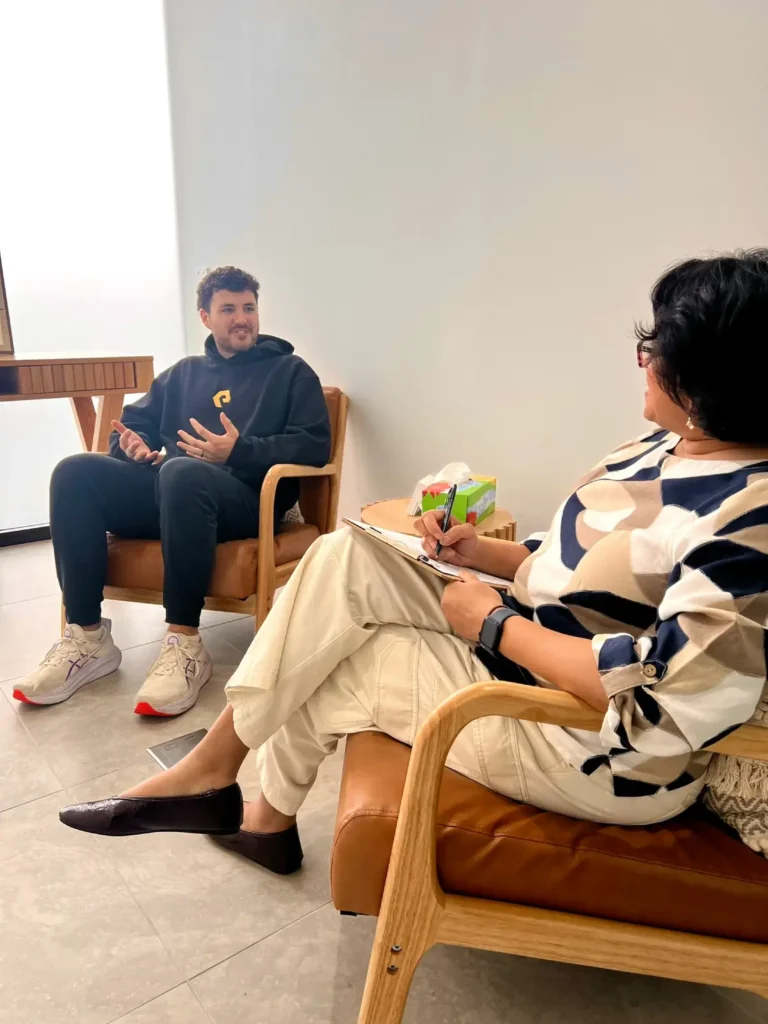
You do not need to be in crisis to see a psychologist. You need to be affected, and if anxiety is changing the way you work, sleep, or relate to the people around you, that qualifies.

Couples therapy at NTD Psychology is structured work, not an open-ended conversation. Both partners attend together.
Nadine’s Approach to Anger Management Counselling
Twenty-five years of practice has shown Nadine that anger operates on three layers: immediate triggers, underlying emotional patterns, and life stressors that amplify everything else. You can’t manage it sustainably unless you’re addressing all three.
Every therapeutic relationship starts with detailed mapping. Nadine identifies your specific physiological warning signals — the chest tightness, the jaw clench, the racing thoughts that arrive just before eruption. Your early warning system operates differently from what the textbooks describe.
Evidence-based intervention follows individual assessment, not a predetermined protocol. Anxiety-driven anger gets different tools than depression-triggered responses or trauma-based reactions. Your therapeutic approach reflects your unique emotional landscape — not a standard package.
Integration with Related Concerns
Anger doesn’t operate in isolation. It lives inside broader context — workplace stress, relationship conflict, major life transitions that are quietly turning up the volume on emotional reactivity. Treating the anger as a separate issue leaves the rest of the picture unaddressed. Nadine’s comprehensive expertise covers interconnected mental health concerns rather than fragmenting care across multiple providers. Stress management, relationship counselling, life transition support — integrated treatment closes the gaps that undermine progress. Research from the Australian Psychological Society shows integrated approaches reduce relapse rates by forty-three percent compared to single-issue treatment models.
Techniques and Methods Used
Cognitive behavioural therapy targets the thought patterns that turn irritation into explosion. Nadine helps you identify your specific cognitive distortions — catastrophising, personalising, mind-reading — that are driving destructive responses. Mindfulness-based regulation teaches you to observe without immediately reacting. It’s particularly effective for people whose anger builds gradually across a stressful day, creating space between trigger and response that simply didn’t exist before. Communication skills development gives you a way to express frustration and hold boundaries without leaving wreckage. Difficult conversations get rehearsed. Assertiveness replaces aggression through practice and repetition.
Which techniques get used depends entirely on your triggers, your communication style, your relationship dynamics. No standard toolkit. Only targeted intervention.
Rebuilding Relationships After Anger Damage
The aftermath is often harder than the anger itself. Words that can’t be taken back. Trust that’s been broken. Family members who’ve learned to walk on eggshells around you. The damage is real, and it requires deliberate, sustained reconstruction.
Apologies are not enough. Research indicates that meaningful behaviour change has to remain visible and consistent for three to six months before damaged relationships show genuine improvement. Consistency rebuilds what anger destroyed. Promises do not.
Addressing the Trust Deficit
The people around you developed protective strategies. They’re avoiding certain topics. Modifying their own behaviour. Withdrawing emotionally — all of it designed to avoid setting you off.
Rebuilding safety requires demonstrated emotional regulation, not verbal commitments to change. Learning to notice when others feel unsafe around you, and responding with reassurance rather than defensiveness — these are the skills that start to rebuild the foundation your anger eroded.
Trust reconstruction follows a predictable pattern: acknowledgment, then demonstrated change, then gradual re-engagement, then renewed intimacy. Rushing any stage destroys the progress made in the one before it.
Individual or Joint Sessions
Some relationships benefit from joint work alongside individual therapy — particularly when the interaction patterns themselves are contributing to escalation. Others need solid individual regulation in place before any joint work begins.
Timing here matters enormously. Premature couples work intensifies conflict rather than resolving it. Nadine assesses relationship readiness and sequences treatment in the right order.
Sustainable repair only becomes possible once reliable individual emotional management is in place.
Workplace Anger and Professional Consequences
Professional environments demand a level of emotional regulation that many people were never taught. A single outburst can undo years of careful reputation-building, damage relationships across an entire organisation, and close advancement doors that don’t always open again.
Corporate settings create specific pressures: high-stakes meetings that require composure, unreasonable demands that need diplomatic responses, conflicting work styles that need collaborative navigation. These are learned skills. They don’t arrive automatically.
Professional Communication Under Pressure
Daily frustrations accumulate. Deadline pressure, difficult clients, organisational chaos. Without proper regulation strategies, minor irritations compound until the explosion that everyone could see coming finally arrives.
Workplace-specific triggers require workplace-specific strategies. How you respond to a micromanaging supervisor is different from how you handle an incompetent colleague. Client requirement changes need a different communication approach than interdepartmental conflict.
Australian workplace studies show that employees with documented anger incidents are forty-seven percent less likely to receive promotions within two years, regardless of their technical performance.
Protecting Your Career Trajectory
Colleagues notice emotional patterns long before a formal complaint ever gets filed. The exclusion from sensitive projects starts subtly. Direct feedback decreases. Leadership opportunities disappear without explanation.
Workplace-appropriate emotional expression protects the position you have now while keeping advancement prospects open. These skills become essential for any leadership role that requires authentic professional relationship management.
Investment in emotional regulation pays career dividends that compound over decades.
The Internal Critic: Breaking the Cycle of Self-Judgement
Your harshest critic isn’t in anyone else’s head. It’s in yours — replaying the outbursts, cataloguing every failure, quietly predicting that this will happen again. And that internal voice creates a destructive loop: shame triggers the very anger episodes you’re trying to prevent.
Post-explosion self-criticism generates emotional pressure that builds toward the next incident. The promises to change. The hypervigilant monitoring of every flash of irritation. The harsh self-judgment when normal frustration surfaces. This pattern exhausts every emotional resource you have while simultaneously increasing your reactivity.
Sixty-two percent of anger management clients report that shame about previous episodes contributes to future explosive reactions.
Breaking the Shame-Anger Loop
Self-compassion produces significantly better anger management outcomes than self-criticism. Clients who can observe their patterns without harsh judgment develop stronger regulation skills than those focused on punishing themselves for every slip.
“I can’t believe I did that again” actually reinforces the neural pathways associated with explosive reactions. Brains interpret shame as threat, which demands a defensive response — the opposite of regulation.
Curiosity replaces criticism. Observation replaces judgment. These internal shifts are what create the space for genuine change.
Building Sustainable Internal Change
Regulation counselling reframes anger as information about unmet needs rather than evidence of personal failure. That shift in perspective makes curious observation possible — instead of panicked suppression every time irritation surfaces.
Internal stability is the foundation. Everything else — addressing anger’s external impact on relationships, career, self-concept — builds from there.
Ready to address anger’s cost to your life and relationships?
Contact Nadine Dardaneliotis to begin specialised anger management counselling that targets your specific triggers and builds lasting emotional regulation skills.
Frequently asked questions
How long does anger management counselling take to work?
Most clients notice improved emotional regulation within 6-8 sessions, though underlying anxiety or depression may require longer treatment.
Can anger management therapy help with workplace conflicts?
Yes, Nadine specialises in workplace stress and helps clients develop professional communication skills that prevent career-damaging outbursts.
Do you offer anger management for couples?
Nadine provides both individual anger counselling and couples therapy to address how explosive reactions damage intimate relationships.
What's the difference between anger management and regular counselling?
Anger-focused therapy specifically targets emotional regulation skills while addressing underlying mental health conditions like anxiety that fuel aggressive reactions.
How do I know if I need professional help for anger issues?
If anger is damaging your relationships, career, or family life despite your best efforts to control it, professional support addresses root causes generic techniques miss.
TESTIMONIALS


AHPRA-registered psychologist and board-approved supervisor. Twenty-five years of clinical experience.